
-
 New York Times best selling author AJ Baime talks about his book, The Accidental President: Harry S. Truman and the Four Months That Changed the World. He discusses Truman's unlikely rise to the presidency, detailed looks at the day FDR died and Truman's first day as president, and the many events taking place early in his presidency including the fall of Berlin, the founding of the UN, victory at Okinawa, firebombings in Tokyo, the first atomic explosion, the Nazi surrender, the liberation of concentration camps, the Potsdam conference, the decision to drop the bomb on Hiroshima and Nagasaki, the surrender of Japan, the end of WWII and the beginning of the Cold War.
 -
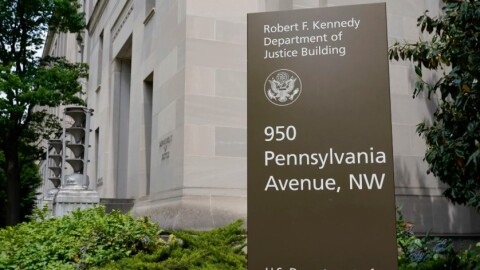 Patrick Semansky/APThe Department of Justice’s Office of Legal Counsel released a memo in June advising states to cease funding for in-home and community-based services that allow Americans with disabilities to integrate within their communities. A Bettendorf-based nonprofit, Hand in Hand, said the move would upend thirty years of evidence-based care.


-
 Liaquat Ahamed talks about his book Lords of Finance: The Bankers Who Broke the World. He reveals history through biography--the lives of four central bankers whose decisions precipitated the Great Depression and led to World War II. Key topics include the gold standard, financial "bubbles," the role of tariffs (Smoot-Hawley Act), lessons for today, and Ahamed's new book coming out soon that is a prequel to Lords of Finance. This book was awarded the 2010 Pulitzer Prize for History.
 -
 Fred Burton, a former State Department special agent and New York Times best-selling author, talks about the book he co-authored with Samuel Katz called Beirut Rules: The Murder of a CIA Station Chief and Hezbollah's War Against America. He discusses Iran's role in terrorist bombings, kidnappings and killings of Americans after the Iranian revolution, the life, abduction and death of CIA Station Chief William Buckley, how 'Beirut Rules' differed from previous spycraft rules, why the US didn't retaliate, and much more. Burton also addresses whether the American public might be more supportive of the current Iran War if the terrorist attacks against the US from this period were given greater weight by the Trump administration.
 -
 Jon Ralston talks about his book, Games Changer: How Harry Reid Remade the Rules and Showed Democrats How to Fight. We discuss Reid's upbringing into poverty in small town Nevada, his rise in politics, relationship with the casino industry, connection with Howard Hughes, investigations of him by the FBI, his rebuilding of the Nevada Democratic party, and the evolution of his political views, including on the filibuster and "nuclear option." Ralston is Founder and CEO of Nevada Independent and regular commentator on MS-NOW. He is recognized as the leading authority on Nevada politics.
 -
 Michael Tackett, Deputy Washington Bureau Chief for the Associated Press and former Chicago Tribune political reporter, talks about his book, The Price of Power: How Mitch McConnell Mastered the Senate, Changed America, and Lost His Party. We discuss his rise in politics, understanding power and how to use it, mastering the rules of the Senate, the importance of fundraising, the filibuster, the Trump impeachments, and much more.
 -
 Brian Reisinger, author of Land Rich, Cash Poor, talks about the US ag economy, the impact of tariffs and globalization, bailout funding, foreign purchases of US land, impact of immigration restrictions, the latest on the Farm Bill, fewer heirs taking over farms, and the political impact of the slumping farm economy in this year's midterm elections.
 -
 The Environmental Protection Agency last November announced a change to the Clean Water Act, citing a 2023 Supreme Court decision, that would alter what bodies of water would be regulated under the act. Local and state organizations react to the proposal, some claiming that most of Iowa and Illinois’ wetlands would lose protections and continue to be degraded.
 -
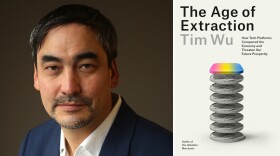 Timothy Wu, professor at Columbia Law School and former White Houseadvisor on tech and competition policy, talks about his new book, The Age of Extraction: How Tech Platforms conquered the Economy and Threaten Our Future Prosperity. We discuss the initial promise of the Internet and what went wrong, how tech platforms choked off competition, platform power in health care and housing, the role of "couch lock" and convenience in creating dependency, whether AI will break platform monopoly power or extend it, the implications for our economy and democracy, and recommendations on how to address platform monopoly power.
 -
 The Quad Cities National Organization for Women (NOW) will hold a Rally for Reproductive Freedom on Sunday, Jan. 18 in Rock Island, near the 53rd anniversary of the Supreme Court decision that legalized abortion before being overturned in 2022.
 -
 David Lynch, global economics correspondent for The Washington Post, talks about his book, The World's Worst Bet: How The Globalization Gamble Went Wrong (And What Would Make It Right). Our discussion includes when this era of "hyper-globalization" began, the attraction of the theoretical underpinnings of globalization, what led to the global pushback, the role of Bill Clinton as the chief cheerleader of globalization, and much more.
 -
 Colin Woodard talks about his new book, Nations Apart: How Clashing Regional Cultures Shattered America. The best-selling author of American Nations explores the regional roots of the partisan divide over several key issues (guns, immigration, climate, authoritarianism) and offers ideas on how to unify the nation based on new cultural insights and opinion research.


